AI is already a reality. The question is no longer whether it needs to be regulated, but how.
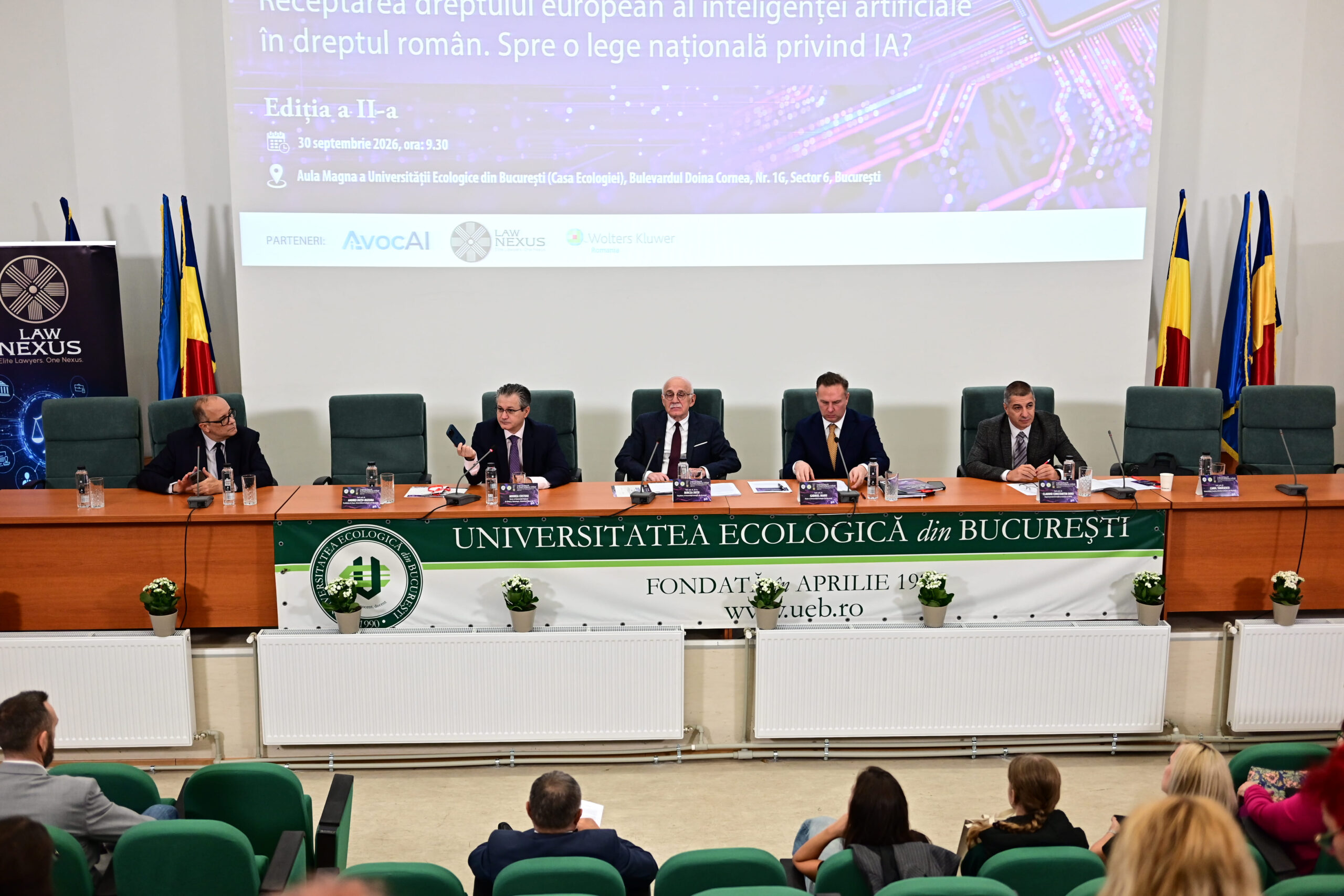
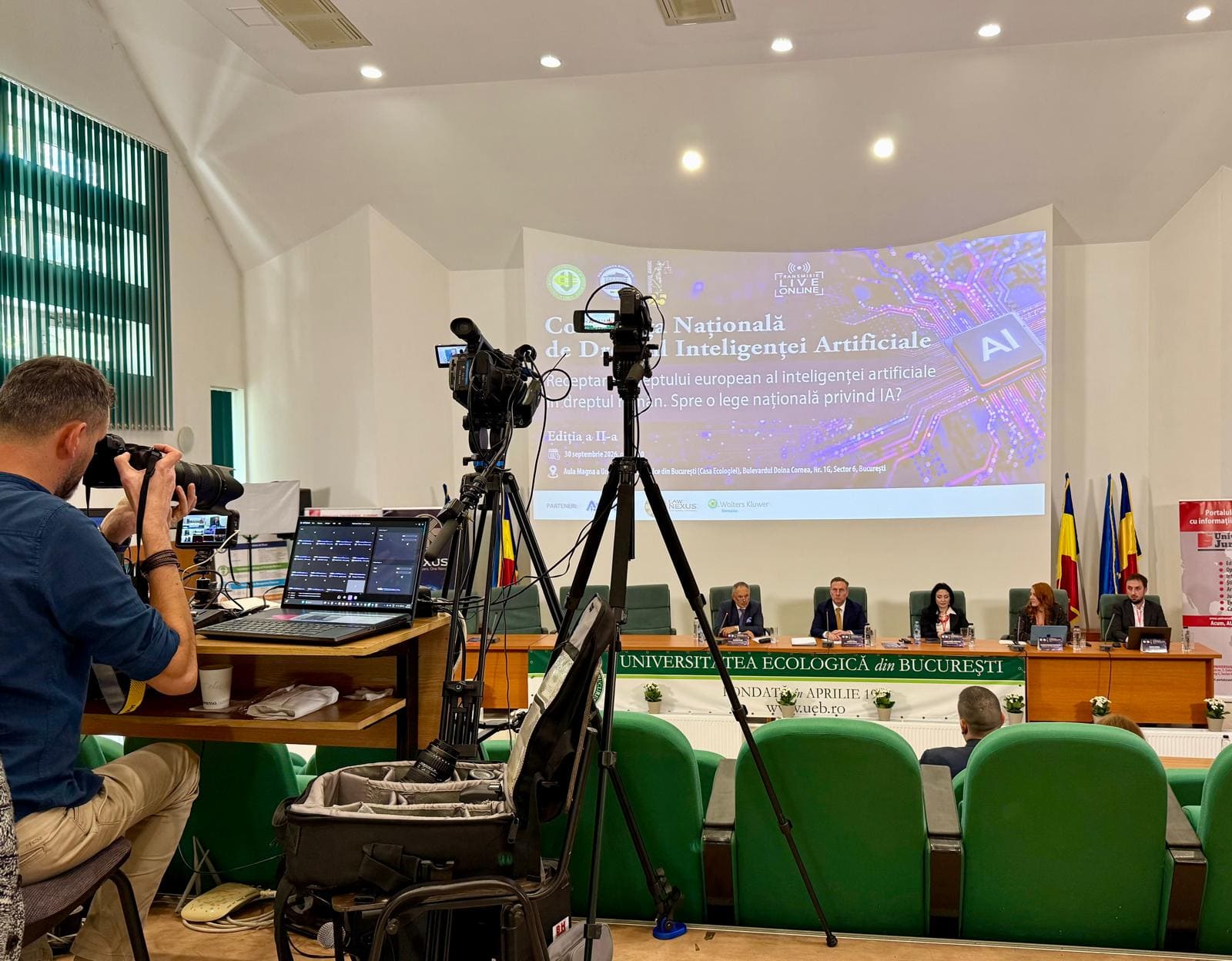
At the second edition of the National Conference on Artificial Intelligence Law, many relevant perspectives and viewpoints were presented and discussed, but one common thread ran through almost all of the interventions: the development and use of AI are no longer hypothetical, nor are they relevant only to a small group of users. Regulation therefore needs to keep pace with this reality. At the same time, poorly calibrated rules risk becoming an obstacle to technological progress rather than a framework that enables it.
Within this broader context, Mihnea Costoiu, Rector of the National University of Science and Technology POLITEHNICA Bucharest, spoke about the need for this conversation to bring engineers and lawyers together, while Assoc. Prof. Dr. Claudiu Constantin Dinu stressed that regulation cannot be reduced to prohibitions alone, but must also address key practical questions: which authorities are competent, who coordinates them, and what national procedures are needed to make the rules work in practice.
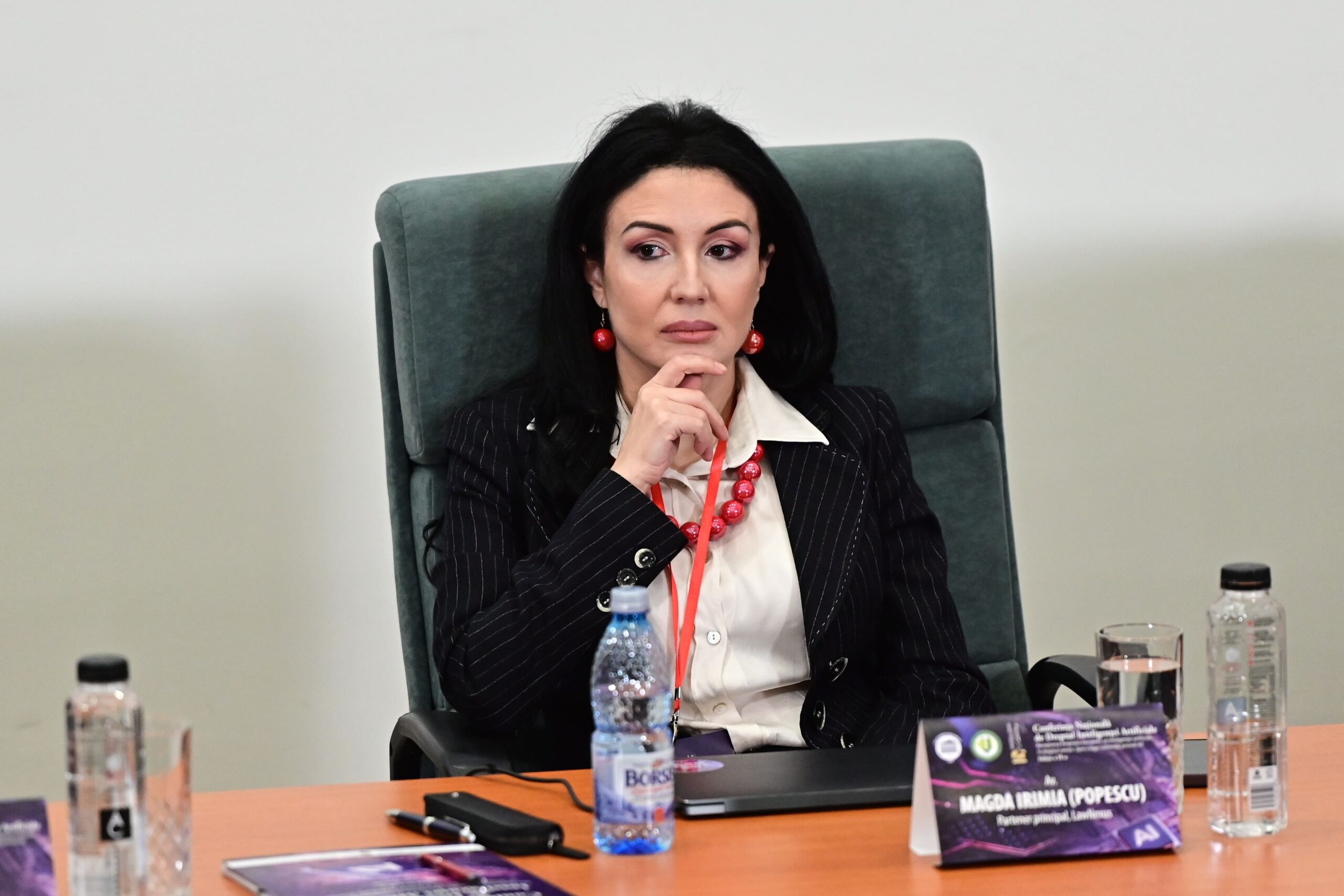
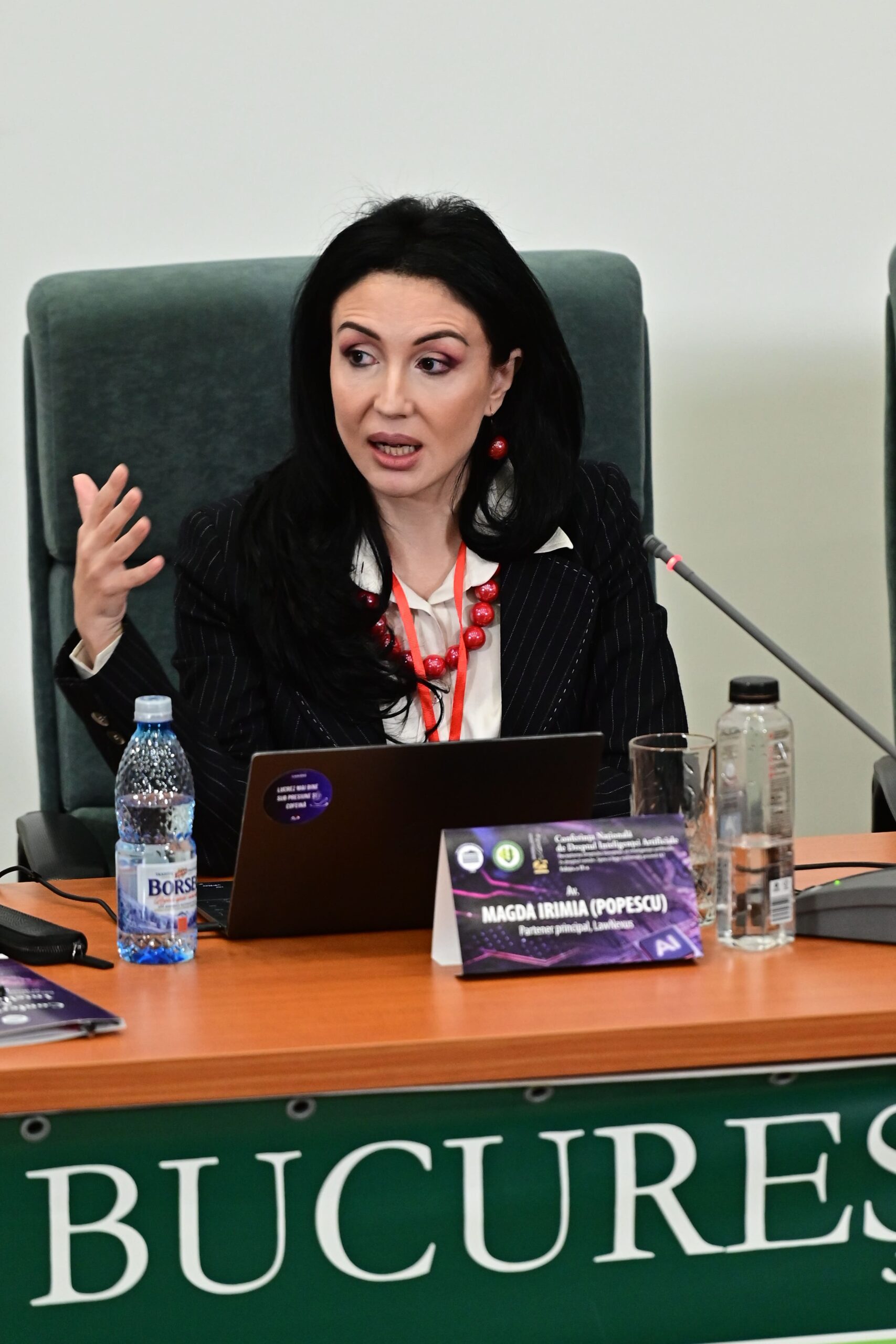
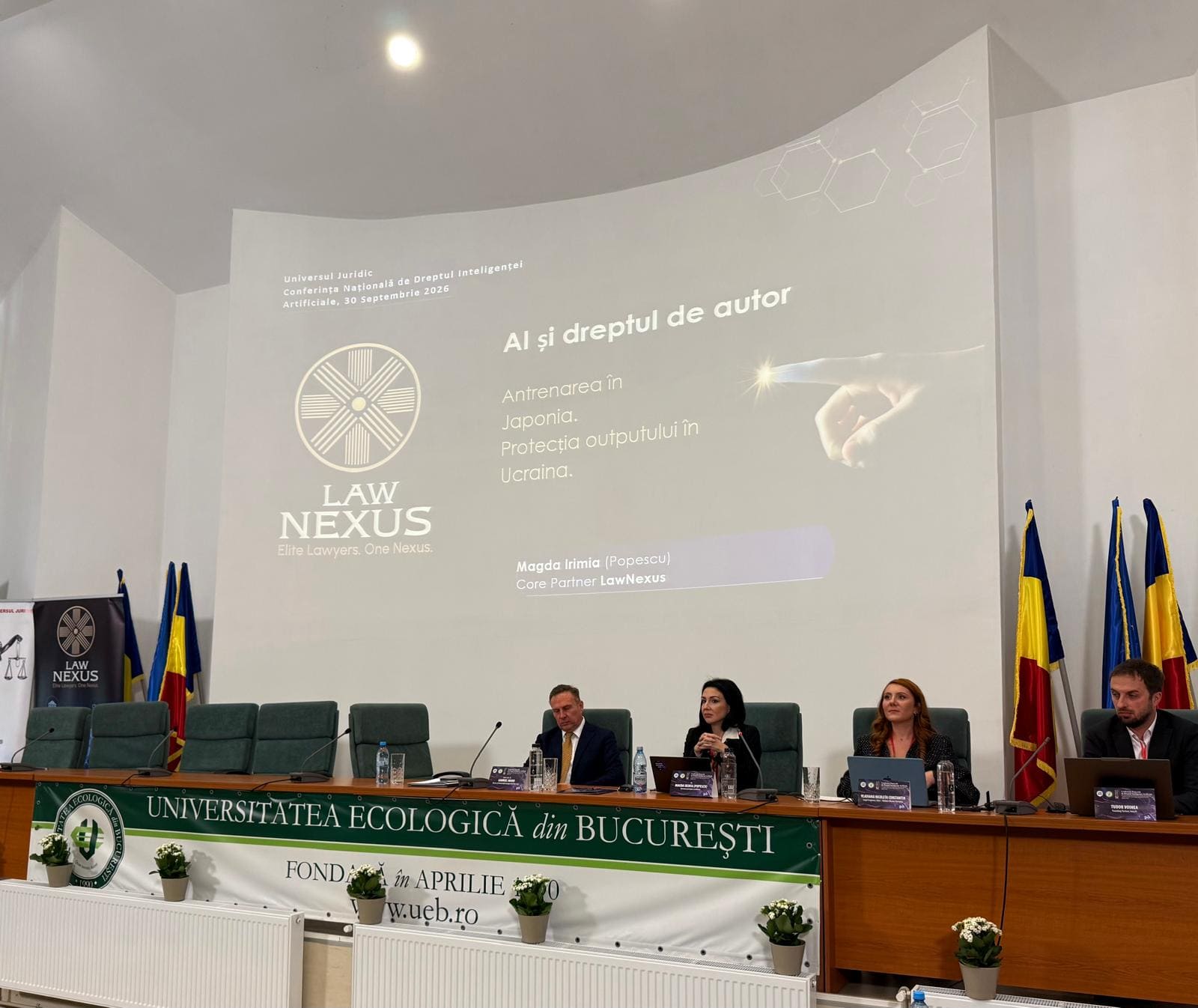
Our colleague Magda Irimia (Popescu) approached the “how do we regulate?” question from an intellectual property perspective. She started from the three points at which AI and content protection intersect – model training, prompts and output – and focused on two of them: training and AI-generated output.
At a time when perspectives beyond the already mainstream EU and US approaches are particularly useful, Magda turned to two less frequently discussed jurisdictions: Japan, in relation to model training, and Ukraine, in relation to the protection of AI-generated output.
When it comes to training, while the debate in the EU and US largely revolves around classical exceptions and limitations to exclusive rights or the licensing thereof, Japan has adopted a different, more permissive approach built around the concept of non-enjoyment. Put simply, the use of protected content may be permitted, irrespective of commercial or non-commercial purposes, when the user does not “enjoy” the intellectual or emotional benefit of the work. This exception fits data analysis and model training, but it does have boundaries, mainly around not unreasonably harming the legitimate interests of rightsholders. Recent case-law shows also a distinct view as regards the functioning of the RAG models.
At the other end of the process lies the question of output. AI-generated content does not qualify for copyright protection in the absence of sufficient human creative contribution – this is the prevailing approach in the EU and US, who take a very strict view in this respect, and, to some extent, in China, which in concrete cases sits at a different end of the spectrum, recognizing the creativity in using AI tools. But the question that raises is – should such AI-generated output remain entirely unprotected even where significant investment, know-how, time and effort stand behind it?
Against this background, Ukraine offers an interesting example by recognizing a form of sui generis protection for certain non-original objects generated by computer programs, including AI. That solution, in turn, raises some very practical questions: who owns the right, what role does the contractual framework play, and how are rights allocated in employment relationships or in projects commissioned by a client?
These are only some of the topics discussed — and, most likely, some of the questions we will encounter increasingly often in legal practice.
We will return on the LawNexus website with a more detailed look at the approaches adopted in Japan and Ukraine, how they differ from the mainstream approaches, and, more importantly, at the questions they raise.
Thank you to the organizers — Universitatea Ecologică din București, Editura Universul Juridic and University POLITEHNICA of Bucharest — with the support of the Ministry of Economy, Digitalization, Entrepreneurship and Tourism, the National Union of Romanian Bar Associations (UNBR) and the National Institute for the Training and Development of Lawyers (INPPA), as well as to all speakers and participants, for a relevant discussion about a reality that is evolving faster than the rules being built around it.
We are pleased that LawNexus was once again a partner of the Conference.